A few years ago, if someone had told me that I would one day start a company focused on water testing, I probably would have laughed.
At the time, I was simply someone who loved swimming and spending time with my family. Like many parents, I wanted our backyard pool to be a place where my two children could play, laugh, and enjoy the summer without much thought about what was happening behind the scenes.
What I did not expect was how much of my own time would end up going into maintaining that pool.
The Same Routine Before Every Swim
Before my kids jumped into the water, I often found myself saying the same thing:
It became a simple part of our routine. I wanted to make sure the water was properly balanced before my family got in.
Any pool owner will probably recognize that routine.
The problem is that clear water does not necessarily mean balanced or safe water. Chlorine levels can shift after a hot day, rain can change the chemistry, and everything from sunscreen to leaves to normal swimming activity can affect the condition of the pool.
Even when the water looked perfectly clean, I still wanted to know what was actually happening in it.
Over time, testing became part of the routine before almost every swim, and I began to wonder why something so important still had to feel so inconvenient.
I Tried the Usual Testing Methods
Like most pool owners, I started with test strips.
They were inexpensive and easy to use, but I often found myself holding the strip next to the color chart and wondering whether I was looking at one shade or another. The process was simple, but the answer did not always feel certain.
Later, I tried traditional liquid test kits. They could provide more detailed information, but they required more time, more steps, and more attention than I wanted to give them on a regular basis.
None of those products were necessarily bad. They simply did not feel like they had been designed around the way ordinary families actually use a pool.
What I wanted was something easier to understand and dependable enough that I did not have to second-guess the result every time.
Looking at the Problem as an Engineer
My engineering background has always shaped the way I look at everyday problems.
When something feels more complicated than it should be, I naturally start asking why.
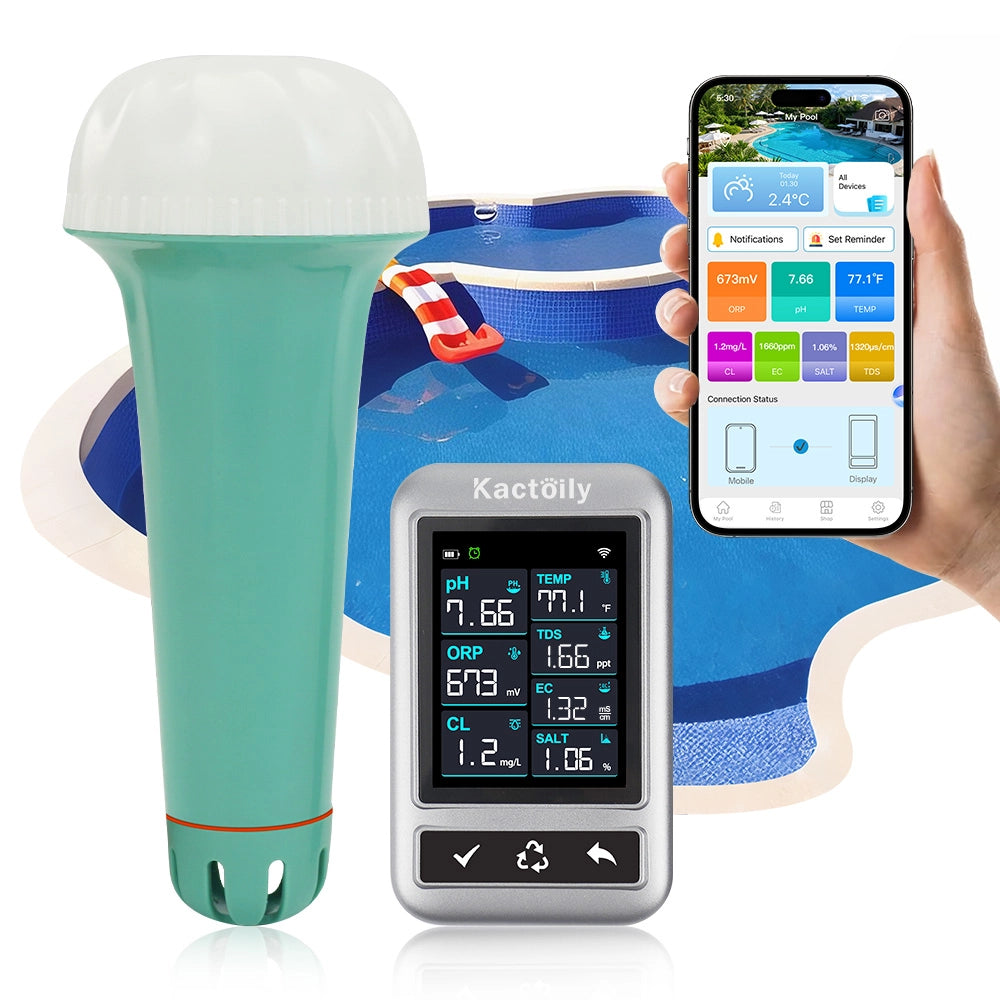
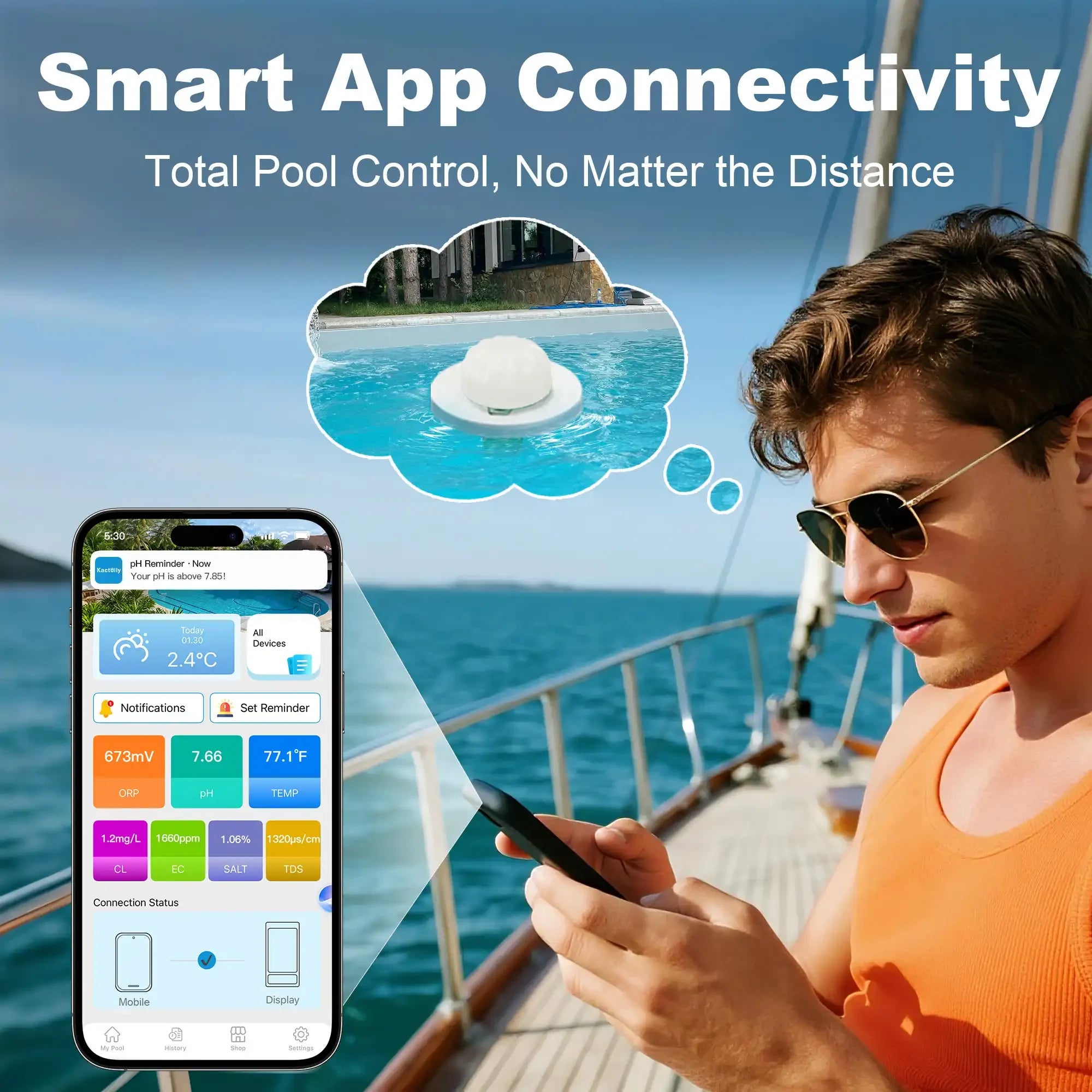
We can control the temperature of our homes from a phone, monitor indoor air quality in real time, and receive alerts when something around the house needs attention. Yet understanding the condition of pool water still often depends on color charts, chemical bottles, and a fair amount of interpretation.
That disconnect stayed with me.
Eventually, instead of continuing to ask why there was not a better solution, I decided to see whether we could build one.
Building Something Families Would Actually Use
In 2021, I began putting together a team to develop a smarter approach to pool water testing.
From the beginning, our goal was not to make the most technically complicated device on the market. We wanted to make something that ordinary families could use without needing to understand water chemistry first.
That meant focusing on a few basic principles: the measurements had to be dependable, the process had to be simple, the information had to be easy to understand, and the product had to help people make better decisions about their water.
At first, we thought the biggest challenge would be the hardware.
We quickly learned that it was much more complicated than that.
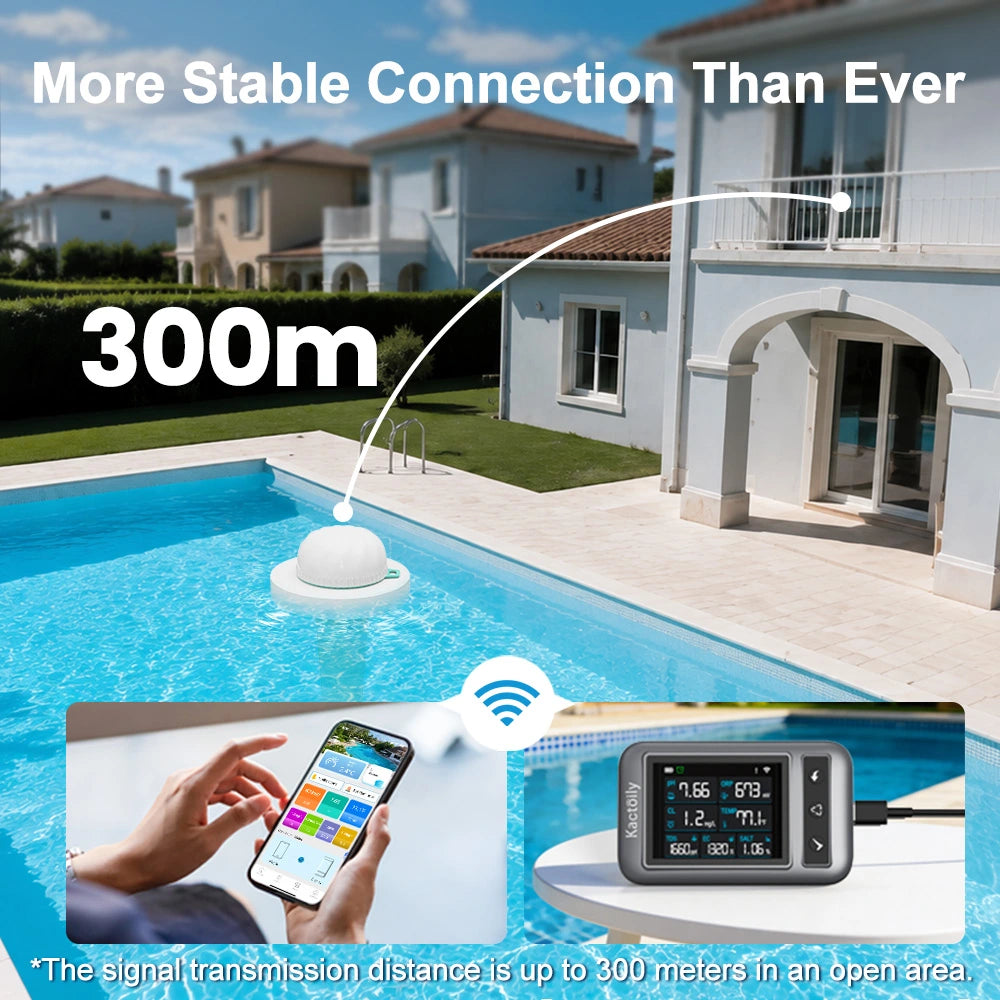
Sensor stability, measurement accuracy, probe life, Bluetooth and WiFi connectivity, app performance, algorithms, and differences in real-world water conditions all affected the final experience. Solving one part of the system often revealed another problem somewhere else.
Some improvements came quickly. Others took months.
And some forced us to rethink what we had already built.
The Moment We Chose to Start Over
One of the most difficult moments came when the product was nearly ready to launch.
We had already invested a great deal of time and effort. The hardware was largely complete, the design was in place, and we were close enough to release that continuing forward would have been the easier decision.
Then, during final testing, we realized that several parts of the product still were not performing at the level we wanted.
The sensors were not as stable as they needed to be under every condition. Connectivity could still be inconsistent in certain environments, and differences in water chemistry exposed limitations that we were not comfortable ignoring.
Technically, we could have launched.
We could have released the product and continued improving it later, which is not an uncommon approach in consumer electronics.
But it did not feel right.
I kept coming back to a simple question: if I would not fully trust the product for my own family's water, how could I ask another family to trust it?
So we made the decision to delay the launch and rethink parts of the product.
That meant additional development costs, more testing, hardware changes, software revisions, and repeated adjustments to our algorithms. In some cases, work that had taken months had to be revisited from the beginning.
It was frustrating at times, but it also became one of the most important decisions we made as a company.
Kactoily Officially Launched in 2023
After years of development and refinement, Kactoily officially launched in 2023.
We were proud to finally bring the product to market, but the launch did not mean the learning was over. In many ways, it accelerated.
Laboratory testing can tell you a great deal, but real customers introduce conditions that are almost impossible to reproduce completely in advance. Different climates, pool chemistries, routers, phones, usage habits, and maintenance routines all create their own challenges.
As more people began using our products, we discovered new ways to improve them.
Some customers reported connection problems that only occurred under certain conditions. Others helped us understand where the app could be clearer or where the product needed to be more forgiving in daily use. We continued improving sensor stability, probe life, connectivity, software, and algorithms as we learned from real-world use.
That process was not always easy, but it made the product—and the company—better.
From 2023 to 2026, We Built More Than Products
Between 2023 and 2026, Kactoily changed significantly.
What began as a relatively small development effort gradually became a dedicated hardware and software organization. We brought together people with expertise in sensors, electronics, firmware, wireless communication, apps, algorithms, manufacturing, and water quality.
We continued investing in research and development, but the most important thing we gained during those years was not a single new feature or product.
It was the ability to solve increasingly difficult problems.
By 2026, we had developed a much deeper understanding of how our sensors behaved over time, how different water conditions affected measurements, how hardware and software needed to work together, and how much the overall user experience depended on small details that customers might never notice directly.
That was an important turning point for us.
Kactoily was no longer simply a team trying to make a better water tester. We had built the technical foundation and the internal capabilities to keep improving the entire system ourselves.
For me, that has been one of the most meaningful parts of the journey.
The Customers Who Grew With Us
Another part of this journey that I did not expect was the relationship we developed with some of our early customers.
Several of them understood that what we were trying to build was different, and instead of simply judging the product by what it was on the first day, they took the time to share ideas, point out problems, and tell us what they hoped it could become.
Some told us directly that they believed in the idea and were willing to grow with us.
That kind of feedback stayed with me.
It reminded us that behind every support message, every product decision, and every technical improvement was a real person who wanted the same thing we did: a simpler, more dependable way to understand their water.
Their patience did not make us feel that the product could be less than excellent.
It made us feel an even greater responsibility to keep improving it.
What Kactoily Is Really About
When I first started working on Kactoily, I was not thinking about building a global brand.
I was thinking about my children standing next to the pool, waiting for me to tell them it was okay to jump in.
Over time, however, I began to realize that the question behind Kactoily was much bigger than one swimming pool.
Can I trust this water?
Families ask that question in many different situations.
It may be the pool their children swim in, the water they drink, the aquarium they care for, or the water they use to grow plants and prepare food.
The situations may be different, but the need is very similar.
Most people do not want to become experts in water chemistry. They simply want reliable information that helps them understand what is happening and what they should do next.
That realization has shaped what Kactoily is becoming.
Why We Keep Building
For us, making water quality management "smarter" does not mean adding technology simply because we can.
It means using technology to reduce uncertainty.
It means taking measurements that are difficult to interpret and turning them into information that makes sense.
And it means building products that people can rely on not only when they first open the box, but after months and years of everyday use.
That is why our mission is:
To make water quality management smarter, more reliable, and simpler for families around the world.
For us, smarter should never mean more complicated.
It should mean fewer guesses, clearer answers, and less time spent worrying about water.
Where We Hope to Go
Kactoily started with one family and one swimming pool.
Today, the team is larger, the technology is better, and our products are being used in more places than I could have imagined when we started.
Even so, I still feel that we are only at the beginning.
Our hope is that Kactoily eventually becomes a name families around the world recognize and trust when they want to understand the condition of their water.
Not because we want people to spend more time thinking about water testing, but because we want them to spend less.
When something changes, they should know.
When everything is fine, they should feel confident enough to stop worrying about it.
That is the future we are working toward: to bring Kactoily into homes around the world and become a trusted leader in water quality management.
The Things We Do Not Want to Lose
As the company grows, there are a few principles I hope we never lose.
The first is listening to customers.
Many of our most useful improvements have started with very simple questions: Why does this have to be so difficult? Can this step be easier? Can the app explain what the numbers actually mean?
Those questions matter because the best technology should make itself less visible, not more. If a product is truly well designed, people should spend less time thinking about how sophisticated it is and more time benefiting from what it does.
The second is building together.
A reliable water monitoring system depends on hardware, sensors, software, algorithms, manufacturing, design, and user experience all working together. No single person can solve every part of that problem, which is why collaboration has become such an important part of how we work.
And finally, we want to keep improving.
Sometimes that means redesigning a sensor. Sometimes it means rewriting software or delaying a launch. Sometimes it means admitting that something we spent months developing is still not good enough.
Those decisions are rarely easy, but they are part of building something people can trust.
We’re Still Just Getting Started
Kactoily looks very different today from the project we began in 2021, but the question behind it has never really changed.
I still think about a parent standing beside a pool while their children are ready to jump in, wondering whether the water is okay.
That simple question—"Is the water ready for my family?"—is what started this journey.
Years later, it is still what keeps us moving forward.
Our goal is to make that answer easier to understand, easier to trust, and easier to act on for families everywhere.
And as long as there is still a better way to do that, we will keep building.