

Popular Topics
- Product Selection & Compatibility
Which KACTOILY Pool Monitor Is Right for My Pool Type?
The right KACTOILY pool monitor depends on your water-treatment system, the parameters you want to monitor, and your preferred product form.
For traditional chlorine pools, KACTOILY offers different monitoring options for pH, ORP, water temperature, and other water-quality parameters. For hot tubs and spas, a compact monitor such as the K-Sure POOL-P3-1 monitors pH, ORP, and water temperature and is designed for pools, hot tubs, and spas.
If your pool uses a salt chlorine generator, please note that KACTOILY’s current pool monitors that rely on ORP or chlorine-related measurements are not recommended for this type of saltwater pool. Salt-chlorine systems can affect ORP behavior and chlorine-related readings, which may result in unstable or unreliable results.
Before choosing a monitor, check the specific product page for Supported Water Type / Sanitizer System.
- Connection Basics
How Does My KACTOILY Pool Monitor Connect, and Why Can It Go Offline or Disconnect?
For KACTOILY pool monitors that use a probe + display + App architecture, there are two separate communication links:
Probe → Display: the probe measures the water and sends readings wirelessly to the display.
Display → App: the display connects to a 2.4 GHz Wi-Fi network and sends data to the KACTOILY App.
This means the symptom can help identify the failed link. If the display itself has no readings, check the probe-to-display connection first. If the display shows current readings but the App is offline or not updating, the probe is usually still measuring normally; check the display’s Wi-Fi, Internet access, and App connection instead.
Different models may use different reset or pairing procedures. Select your product in Product Support for model-specific troubleshooting.
- Readings & Accuracy
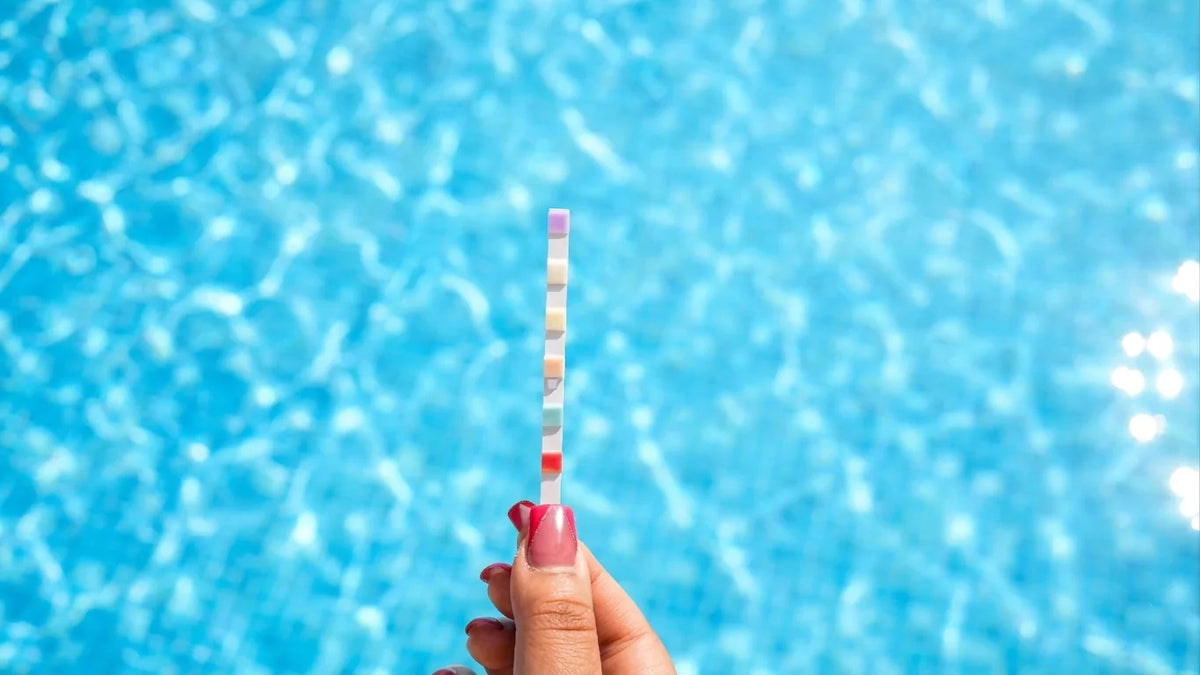
Why Are My Readings Different From Test Strips or Another Tester?
Some difference between testing methods is normal. Results can vary because of different measurement technologies, sampling locations, testing times, sensor calibration and condition, water temperature, instrument resolution, and test-strip color interpretation.
For a meaningful comparison, test the same water at approximately the same time and allow the electronic sensor reading to stabilize first. If a consistent difference remains, clean the sensing area and check calibration before assuming the probe is faulty.
Why Do My Readings Fluctuate or Suddenly Change, Especially ORP?
Water conditions are constantly changing, so some movement in the readings is normal. Readings can change because of recent chemical treatment, water circulation, strong jets or bubbles, probe location, water-temperature changes, swimmer load, contaminants, or sensor contamination.
ORP is especially dynamic. ORP (Oxidation-Reduction Potential) reflects the water’s current oxidation/disinfection potential; it is not a fixed chemical concentration. Even when pH is relatively stable, ORP can still change with sanitizer activity, contaminants, temperature, circulation, or recent dosing.
Focus on the overall trend rather than a single momentary value. If a reading remains consistently abnormal after water conditions stabilize, check sensor cleanliness and calibration. ORP does not directly represent free chlorine concentration in ppm.
- Calibration
If the Probe Is Factory Calibrated, Why and When Should I Recalibrate It?
KACTOILY pH and ORP probes are calibrated before shipment, so recalibration is normally not required before first use. Over time, the sensing elements can gradually drift because of long-term use, contamination, storage conditions, normal aging, or drying.
Consider recalibration when a reading remains consistently different from a reliable reference, after contamination if cleaning does not restore normal readings, after extended use, or after a dried sensor has been rehydrated but still reads abnormally.
Do not recalibrate because of one unusual reading alone. First rule out recent chemical treatment, probe placement, strong flow, bubbles, and actual changes in the water. Follow the calibration procedure for your specific product.
- Sensor Care
What Should I Do If the Sensor Becomes Dry or Was Stored Without KCl Solution?
pH and ORP sensing elements should be kept moist during storage. If the sensing end has dried out, immerse only the sensing end in KCl storage solution and let it soak overnight to rehydrate the pH/ORP sensing elements.
After soaking, rinse the sensing area gently with clean water, return the probe to the water, and allow the readings to stabilize. If the readings remain abnormal, recalibration may be required. If stable and reasonable readings cannot be restored after rehydration and recalibration, contact KACTOILY Support.
Do not scrape or clean the sensing elements with hard brushes, sharp tools, or abrasive materials.
-

Smart Pool Monitor
POOL-P7-3
-

Solar Pool Monitor
POOL-P4-1

